

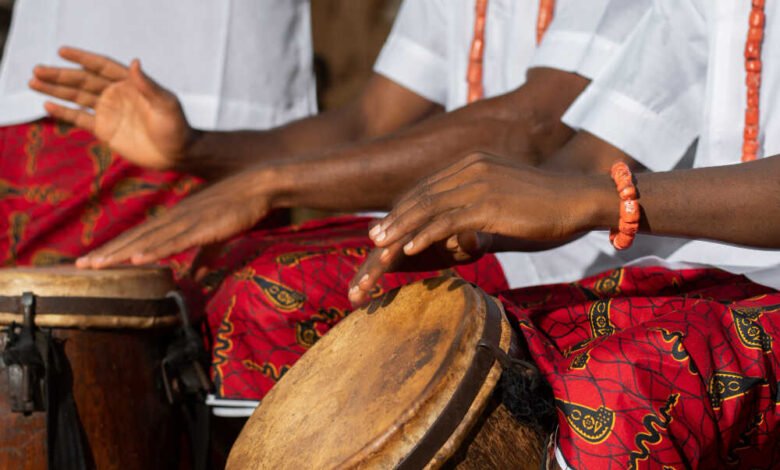
The music of Africa is not just closely tied to its culture. It is also tied to everyday life. The instruments, especially percussion, are central to African music. They act as the heartbeat of the musical heritage of the continent. These tools have been transformed as time goes by. But they have remained socially important. Not to mention, they are present to this day in contemporary African culture.
African Music Foundation
Traditional African music relies on percussion as its foundation. African music is strongly dependent on rhythmic structures. These structures are created with the help of various percussion instruments. The continent employs drums, rattles, and shakers, each region possessing its own instruments and rhythm. According to African Drumming, these percussion instruments were traditionally composed of the types of materials that were easily found in the environment, which included wood, the skin of animals, and natural fibres, and thus accessible to many different communities.
The percussion instruments used in African music go beyond keeping time. They don’t just serve to communicate. They also mark significant events in life. Drumming has been a central aspect of African rituals. The drums are frequently a channel connecting the physical realm to the spiritual realm. This encourages ancestral spirits to partake in the feasts.
The Significance of the Drum in African History
The most recognisable African musical instrument is the drum. The purpose of the drum extends well beyond merely being a musical instrument. It is not just a cultural emblem. It is also a sacred relic. In the past, rural areas used drums to relay messages over long distances. This was before modern technology was introduced. The bass notes of the drum might speak over a mile, and it was necessary to warn a community of monumental occasions.
African Drumming says that the drum is frequently a spiritual building. The process of creating the drum in certain cultures entails rituals to make sure that it is filled with the appropriate energy, ready to communicate with the spirits. There are those preoccupied with the idea that playing the drum is a vocation. This is a means of serving the community and ensuring that the past is not forgotten. An example is the djembe. This is one of the most renowned African drums. It is commonly played at major celebrations or ceremonies.
Other Traditional African Instruments
Drums are central to African music. However, numerous other instruments also play significant roles in history. A good example is the kora. This is a kind of harp that is mostly played in West Africa. It contains 21 strings and is plucked with the fingers.
In Mali and Guinea, another tool is the balafon. This is a type of wood xylophone. It consists of wooden slats that are beaten with mallets. This helps to create musical notes. The balafon has a vast history within the musical traditions of West Africa. It is commonly paired with drums during shows. In turn, this orchestrates a layered sound.
The Role of African Music
Music in African societies is more than entertainment. It is also a strong cultural expression. Music doesn’t just contribute to socialization. It also contributes to the maintenance of history. The traditional songs are mostly transmitted orally. Their lyrics often narrate tales of the origins. In Africa, music has been used as an educational instrument. Here, children are not just taught about their culture. They are taught about their family backgrounds, too.
Drumming experts say that drumming is closely interconnected with the community. Drums are used to mark the phases of life. Not to mention, it marks the beginning with birth. They are also employed in special events to enhance community cohesion. The beat of these instruments is not merely entertainment; it serves to strengthen the social fabric of African society by promoting the following
- Unity
- Sense of participation
African Instrument Evolution
African instruments have evolved over centuries, changing and adapting as a result of contact with other cultures and the outside trade. Although conventional instruments are still pivotal to African music, cultural exchange has led to the development of modern forms. An example of this is the djembe. It now takes on a diverse range of uses in music globally. The impact of African rhythms has been far-reaching beyond the continent. Such influences have touched numerous genres of music.
African Drumming opines that the importance of these instruments has not faded in this evolution. Instead, it has enabled African music to thrive. It is acquiring new dimensions without forgetting its origins. In contemporary music, fusion genres have absorbed percussion instruments. The drum has remained an invaluable instrument of musical expression. It has evolved to reflect the tastes of our modern days. However, it keeps its cultural essence.
African Instruments on the World Music Platform
African musical instruments have truly gained an important niche in the world of music. The highest in demand among musical instruments are percussion instruments. They have distinct beats that are sought after by musicians around the globe. The universal appeal of African drumming has resulted in partnerships with artists with diverse musical backgrounds. This results in hybrid genres where African rhythms are mixed with electronic music elements.
Musicians and drummers all over the world are still experimenting with the instruments of African eras. They are not just pushing genre boundaries. They are developing new music, too. African music continues to be practiced. Also, African countries have vibrant communities of musicians who perform African music in cities all over the world. This helps to preserve these ancient traditions. With the globalisation of African music, the continent has turned into a hub of cultural pride.
Conclusion:
In conclusion, the origins of African musical instruments are not just historical. They are intricate, too. This is because they are intertwined with the cultural ties of African people. The symbolic application of the drum serves as a means of communicating with ancestors. For instance, the sound of the kora has influenced music throughout the continent. Such instruments are more than musical instruments. They are also critical cultural artefacts.
These instruments will always be in the centre of cultural exchange. Plus, they will be the legacy of the great music Africa has been known for all over.
Visit Here zuhairarticles.com for more blogs