
How Professional Welding Services Improve Quality, Safety and Project Efficiency

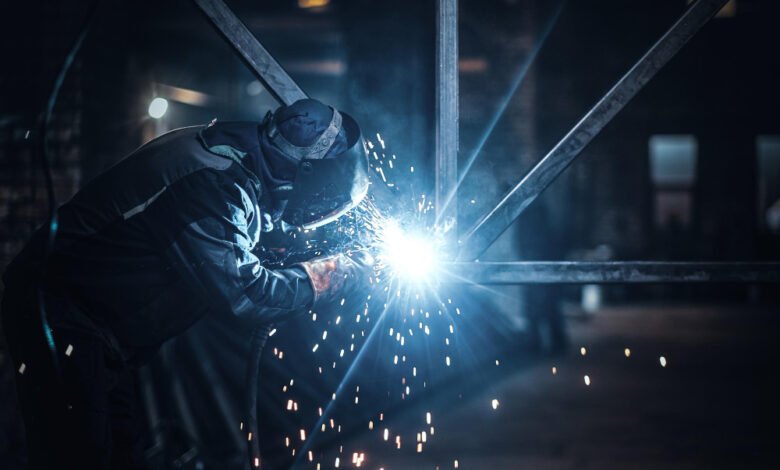
A good weld holds. A bad one holds until it doesn’t, and then you pay for rework, downtime or worse. Professional welding services make the first outcome repeatable.
Looks don’t tell you if a weld will hold
Most people judge a weld by the bead. It’s smooth and even, so it must be strong. Yet neat beads can hide a lack of fusion underneath, while rough-looking beads may test perfectly. Visual checks alone can’t tell you everything happening inside the joint.
That’s why professionals work to a written standard rather than relying on appearance. In Australia, structural steel work is commonly assessed against AS/NZS 1554, which sets out what a sound weld has to meet. The welder follows a weld procedure specification that covers amperage, travel speed, gas mix and pass sequence. If those settings aren’t right, the weld won’t meet the specification, however tidy it looks. A professional understands this and won’t skip the paperwork simply to save time.
Testing confirms the result. Non-destructive testing methods such as radiographic and ultrasonic testing can find flaws that visual checks miss. Professionals expect that testing and weld accordingly. Less disciplined operators may simply hope that no one tests the work.
When you hire a professional, you’re paying for more than a tidy bead. You’re paying for a joint made to an established procedure that can be checked afterwards. The connection between settings, execution, testing and proof is what separates qualified trade work from guesswork.
Clients often ask why two quotes differ so much for the same drawing. One includes preparation and testing time, while the other skips those steps and assumes you won’t check. The first price looks higher until the second job fails and requires repair.
What actually causes weld defects
Welds don’t fail at random. Porosity, lack of fusion, undercut and cracking each leave clues about what went wrong. Porosity often points to damp consumables or wind blowing shielding gas away. Lack of fusion commonly means the joint was dirty or the heat was too low to melt the base metal fully. Undercut and cracking can tell a similar story about rushed travel or poor heat control.
Fit-up decides a lot before the arc even starts. Cleaning, bevelling, tacking and clamping all affect how the metal fuses. If mill scale, oil, moisture and rust remain on the bevel, gas can become trapped and pores may form. If the gap is wrong, the root won’t fuse properly, and that gap becomes a crack starter. Too much heat widens the heat-affected zone and can leave the surrounding metal brittle. Too little heat produces a joint that looks joined but isn’t properly fused.
Consumable handling is an easily overlooked cause of failure. Stick electrodes pick up moisture quickly when they’re left out. MIG wire with surface rust feeds poorly and brings hydrogen into the pool. A professional stores rods in ovens while keeping wire clean and dry. Gas flow is also checked before work starts.
None of this comes down to luck. It requires proper preparation and consistent discipline on every joint.
The heat-affected zone deserves attention of its own. It never melts, but heat still changes its grain structure. Fast cooling in this area can trap hardness and invite cracks under load. Controlled preheat and steady travel help keep that band tough. Professionals monitor it even though it sits beside the bead rather than within it.
Why paperwork matters more than promises
Anyone can say they can weld. Paperwork provides evidence. In Australia, the baseline is often a Certificate III in Engineering, Fabrication Trade or an equivalent trade credential. That qualification means the welder has completed the required hours in cutting, forming, joining and testing metal. It doesn’t guarantee perfect work, but it establishes a minimum level that clients can verify.
A weld procedure specification goes a step further by recording exactly how a given joint must be welded. Material grade, thickness range, preheat and consumable type are all listed. A welder qualified for that procedure follows the documented requirements. An inspector can then compare the completed weld with the specification.
Casual labour usually can’t provide that chain of records. There may be no clear record of who welded each component or which settings were used. If a bracket fails six months later, you have no traceability and little recourse. A contractor working to procedures provides names, dates, settings and test results tied to each weld. That record helps you pass audits and resolve warranty issues without relying on guesswork.
Don’t hire a story. Hire a file you can check.
Repeat work demonstrates the benefit. The tenth bracket is welded like the first because the settings don’t drift. New crew members follow the same procedure sheet. Clients receive square frames with holes that line up as intended. That consistency is why professional contractors document their work.
How to judge a welding contractor before you hire
Clients are told to ask four things before any sparks fly. Request trade papers and recent procedure qualifications. Confirm which standard the work will meet and how compliance will be checked. Ask to see a sample weld report containing photos and test notes. Insurance papers and safety documents should also be provided up front.
Good answers are specific. A contractor should be able to name the procedure and test method without hedging. For readers planning structural or site work, engaging certified welders perth wa with documented WPS qualifications ensures your project meets both Australian Standards and site safety requirements. Vague replies should be treated as a warning sign. If a contractor can’t provide previous reports, it is unlikely to start producing them after you’ve paid.
Equipment and housekeeping should also be checked. Tidy leads, calibrated machines, marked gas bottles and clean benches reveal plenty about working practices. The same applies to a clear plan for hot work permits, fire watches, isolation protocols and insurance coverage. That documentation suggests the contractor has experience working on active sites. If safety paperwork arrives late or half-completed, the welding may receive the same level of care.
Price still matters, of course. But the cheapest quote without supporting documentation often becomes the most expensive job once rework begins.
Welding safety is a health issue, not a checklist
Welding fume is more than unpleasant. The International Agency for Research on Cancer reclassified all welding fume as Group 1 carcinogenic to humans in 2017. The review covered about 54,000 welders (World Health Organization). That finding made proper fume control a basic requirement. Contractors can no longer treat suitable masks as optional equipment.
Fume control starts with extraction rather than relying on a worker’s lungs. On-bench arms, downdraft tables, on-torch extraction and general ventilation draw particles away at the source. Outdoors, positioning and wind conditions matter, so professionals still use respirators when airflow can’t be relied upon. Helmets and flame-resistant clothing protect against burns and arc eye. Clean air and intact skin should be treated as the working baseline.
Site work adds both fire and electric shock risks. A professional arranges hot work permits before striking an arc. The crew sets up fire watches and removes nearby combustibles. Extinguishers remain close at hand and are checked. Nearby electrics are locked out, and the work zone is clearly marked so others stay away. That preparation takes minutes and helps prevent incidents that can shut an entire site down.
Clients carry less risk when these controls are handled properly. Permits and fire watches are in place before work starts, rather than being organised after welding is under way.
The equipment brought to site tells you plenty on arrival. Auto-darkening helmets in good condition and flame-resistant jackets without frayed areas indicate care. Half-face respirators with spare filters suggest a crew that maintains its protective equipment. Dirty lenses and cracked leads indicate the opposite. You don’t need welding experience to recognise the difference.
Shop work beats field fixes for speed and cost
Time can be lost well before welding begins. Searching for leads and grinding in awkward positions can consume hours. A fabrication shop removes much of that delay. Jigs hold components square, while positioners turn the joint towards the welder. Benches keep the work at waist height. The workflow is planned so cutting, fit-up, welding and checking take place in the correct order.
Rework is where cheap welding becomes expensive. A flaw found at the bench can take only minutes to grind out and repair. The same flaw discovered after painting, coating, transport and installation may take hours to correct. You then pay for return transport to the shop as well as repainting. Getting the work right first time remains the cheapest practical plan.
Professionals also save time by using better inputs. Clean wire, the correct gas, sharp tungstens and dry rods run more smoothly and create less spatter. Settings are established once and then maintained instead of being adjusted on every pass. Tack sequences are planned to control movement and keep frames square. Those small improvements accumulate across a full working day.
On-site welding still has an important place. But fabricating first and then fitting on site helps protect project deadlines.
Planning also reduces idle time between trades. Steel arrives marked and sequenced, so fitters don’t waste time sorting piles. Welds are completed before paint crews are booked, rather than being done around them. Cranes and trucks are booked once instead of returning for remedial work. That order keeps the wider programme moving.
Matching the process and metal to the job
Different jobs require different welding processes. MIG runs quickly on mild steel and suits longer production runs. TIG provides fine control on stainless steel and thin sections where appearance and sealing matter. Stick remains useful outdoors, where wind and rust can interfere with gas coverage. Flux-cored wires suit heavier plate and site joints that require greater depth.
The choice of metal changes the approach. Mild steel tolerates small variations in heat, while stainless steel does not. Stainless holds heat and can lose corrosion resistance if overheated. Aluminium draws heat away quickly and requires clean oxide removal along with a hotter start. High-strength alloys are the least forgiving and often require preheat and strict interpass temperature control.
Traceability connects the whole process. Welder qualifications, WPS records, test certificates and NDT reports form a complete pack for each job. If an insurer or auditor asks for information two years later, you can show who welded each joint and how it was checked against the approved procedure. Without that file, you have to argue from memory. With it, you can point to documented evidence.
Many failures we’ve cut open come back to using the wrong settings for the metal. Insufficient heat on aluminium leaves a tall bead without root fusion. Excessive heat on stainless sugars the back, allowing the joint to rust from within. The wrong filler on high-strength steel can crack days later as hydrogen moves. A contractor who asks about material grade and service conditions before quoting is already taking the right approach.
Don’t guess the recipe. Match it to the job and record it properly.
Good welding looks uneventful on paper and consistent on site. Settings match the metal, and fumes are drawn away from workers. Every joint leaves a clear record. Choose that kind of contractor and you are buying fewer surprises, less rework and finished work that stays put.
Read also: How to Choose the Right Style of Video Production for Your Brand